


Sloe Port Using Leftover Sloes
Updated: Oct 11
So you've made your Sloe Gin and strained it, and are left with beautiful sloes drenched in Gin. You've heard there are things you can do to avoid all that ginny sloeeey (word?) goodness going to waste. Yes there are, and Sloe Port is one of them. Slider is another - when you steep the sloes in cider, yum - but here we are concerned with making Sloe Port using leftover sloes.

This is not technically port of course, that's just a name someone must have used at some point and it stuck. It is more like a fortified wine because it adds the gin (in the berries) plus brandy to red wine and leaves them to turn into something wonderful.
The first time I made it I forgot about it and the berries sat in the mixture for over a year. That wasn't a bad decision, in fact it turned out great. But sometimes that can be too long I have since discovered. The berries start to break down and that creates a lot of sediment later, without adding much to the taste. So somewhere between 3 and 9 months is my timescale now.
Sloe Port really is the most delicious drink - I actually (slightly) prefer it to Sloe Port.
Sloe Port Using Left Over Sloes - Recipe
Makes 1 litre
Ingredients
About 500g of the sloes left over once you've drained your Sloe Gin
1x 750ml bottle of red wine - any cheap red wine will do
100g granulated sugar
200ml brandy - nothing too wildly expensive as you will struggle to taste in its original form when it's added to your Sloe Port. It will just give a lovely kick.
You will also need
a large, clean preserving jar with flip top lid (large enough to contain everything,
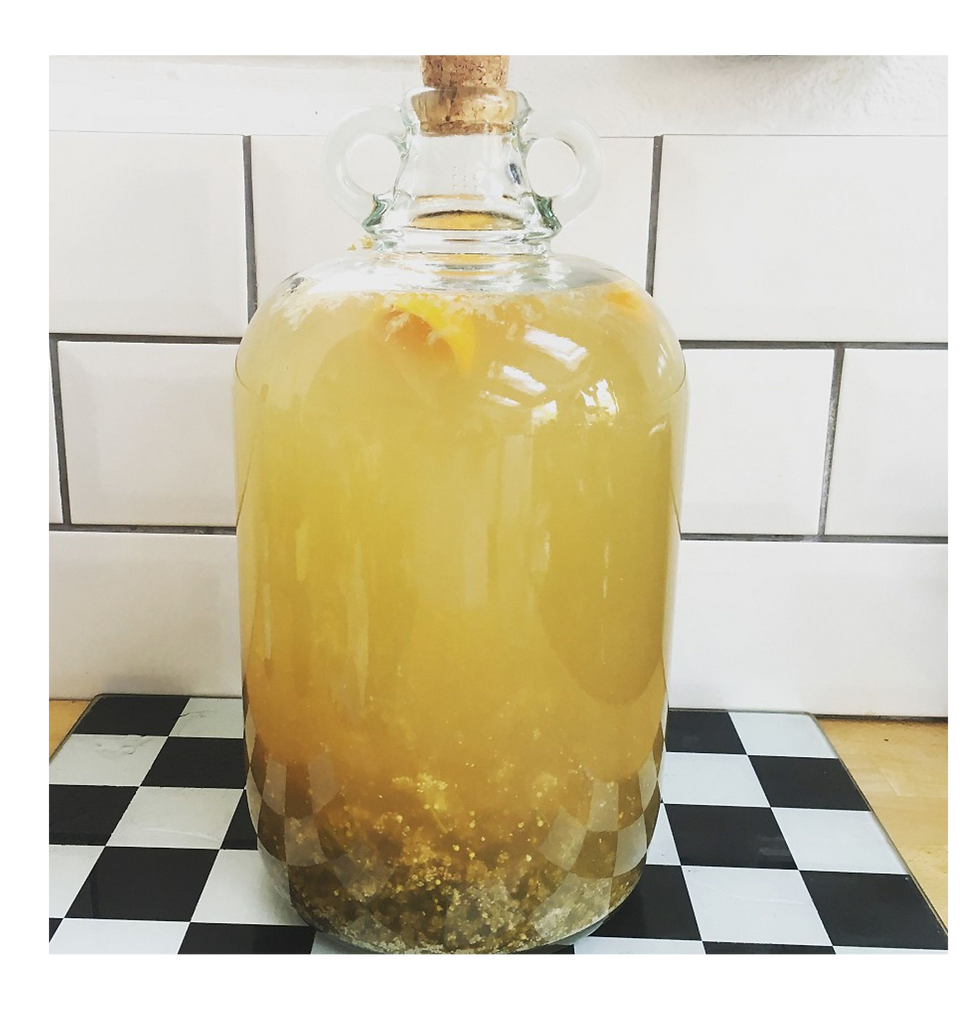
or you could use two smaller jars as I did in the image later. Simply split the ingredients in half).
bottles for your sloe port
Method
Add the gin-soaked sloes and sugar to the jar. Pour the bottle of wine over it and the bottle of wine to the jar. Seal the top and shake daily to ensure the sugar is fully dissolved and the gin leaves the berries, which could take up to 3 weeks.
Once the sugar seems to have dissolved, add the brandy to the jar, shake well and put in a dark place for at least 3 months. I tend to try mine at that point with a sterilised spoon or pipette, quickly replacing the lid to avoid oxidising the wine. It may be ready then, if not then leave for another 3-6 months.
When it's ready, strain off the berries through the muslin, twice if the berries have really started breaking down.
Sterilise your bottles and decant the Sloe Port into them. Lovely to give away as gifts, even lovelier to drink yourself.
The first year I made this, I tried the same recipe using the the cherries and blackcurrants I had used to make vodka liqueurs. It was wonderful. If you make other dark berry liqueurs, like Cherry Brandy or Damson Gin, you can follow the same method as above.

As with Sloe Gin, and most liqueurs in fact, you do need to wait a while before these drinks are ready to enjoy at their best. They are so worth the wait.
Want to plan your Winemaking Year?
Book recommendation:

A 2027 Diary combined with a Planner. Imagine a year of making and drinking your own wine, cider, mead and liqueurs from natural ingredients, some of which you may have foraged or grown yourself. That is what this Brewing Diary and Planner will help you to do.
The art and craft of making delicious wines, meads, cider and liqueurs from fruits and flowers is enjoying a well-deserved resurgence. With a little knowledge, creativity and forward planning, anyone can enjoy the satisfaction of making their own delicious, traditional drinks throughout the year, making the most of what is in season.
Planning also helps to make the most of each ingredient. Gin-soaked sloe berries, for example, can be added to homemade cider to produce a delicious drink known as Slider. Or indeed Sloe Port, as above. However if you want to make the whole drink from scratch, this requires the cider to be ready before the sloes are left over from making sloe gin. Or imagine handing over a liqueur to the lucky recipient for Christmas which has been perfectly matured to be at its peak, rather than needing a bit longer before it will be at its best. This is where a diary and planner is the perfect accompaniment to your brewing year.


Comments