


Round up of Homebrewing Equipment Kit Essentials
Maybe you bought a brewing kit without cleaner/steriliser and now you realise you need some. Or you have a kit without a hydrometer and you now want to measure the alcohol content of something you're about to start making. Or perhaps you found some brewing bits in the garage and want some other kit to start brewing. I get asked about equipment a lot, so here is my round up of Homebrewing Kit Essentials which can either be added to an existing kit or added to the random glass demijohn you found in the loft to create a kit.

Why don't all kits contain everything I need?
Very often you don't need as much equipment as you think you do to get going. A lot of homebrewing kits that are available are designed to get you going at a low cost, and so they may not contain the more expensive (and often optional) pieces of equipment you read about, such as a hydrometer. So if you've bought a basic kit and the winemaking has gone well, you may now be ready to expand your equipment. Or you might have made everything and be looking to source bottles.
So here is my list of extra homebrewing bits which I add to all the time. I have included a QR code for each item for use with a phone as well as a link to click on, as I know some of us prefer one over the other.
VWP Cleaner/Steriliser. Used extensively in UK homebrewing circles for years, this is a powder you mix with water for sterilising all equipment before you use it. More about sterilising here. |  |  |
Triple scale hydrometer for measuring the alcohol content of your wine, cider or mead. Note: readings need to be taken at beginning and at the end of the brewing process. More about using a hydrometer here. |  |  |
Green Glass Wine Bottles. Dark glass is best for storing red wines, as it prevents the light from fading the wine's colour whilst it matures. See below for white wine bottles. |  |  |
Clear Glass Wine Bottles. Suitable for storing white wines. For red wines it is better to bottle in green glass to stop the colour from fading - see above. |  | 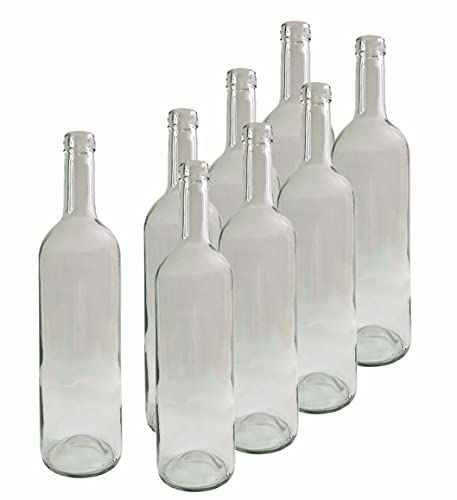 |
1 litre PET plastic bottles with caps. Recommended for sparkling cider, sparkling elderflower etc because the pressure that builds inside the bottles can cause glass to shatter. |  |  |
Amber Swing Top Bottles, like the green branded beer bottles you may be familiar with. Ideal for bottling ciders and beers, avoiding the need for corks, corkers and caps as the stopper is attached to the bottle. |  |  |
Double Lever Hand Corker. You use these to to insert standard corks (see below) into the necks of wine bottles. They can either be new wine bottles as above or recycled commercial ones - the neck size is the same. |  |  |
Standard Straight Corks. These are the corks widely used in wine bottles for homebrewing. You will need a corker to fit the corks into the bottles (see above). |  |  |
Traditional 1 gallon/4.5 litre/6 bottle glass demijohn. If you brew in one of these you need a bung with a hole in it for the neck, into which an airlock will fit. This one has both of those included. |  |  |
PET demijohns. A cheaper, lighter version of the glass demijohn above. You don't need a bung as the cap has a hole drilled into it with a grommet fitted. The airlock fits straight in the grommet to create a seal. |  |  |
Simple Syphon. Designed for transferring liquid from a fermenter into a demi-john or bottles (also known as 'racking' which is explained here). The syphon has a small trap at one end to catch any sediment that has settled at the bottom, and a tap at the other. |  |  |
So that's my round-up of homebrewing equipment kit essentials, which I will come back and add to periodically.
So the question is... what did I miss? :)



Comments