


How to make Honey Blaand or Fermented Milk Mead
Updated: Aug 28
Despite brewing Mead for years, making cheese and fermenting generally, I didn't come across Blaand until quite recently. Blaand is one of the lesser known homebrewed drinks. It can best be described as a kind of Milk Mead made with whey and honey, which has usually come from cheese made with milk. You might therefore say that it's the ultimate blend of milk and honey which have been fermented together. The stuff of Vikings perhaps?
Fermented Milk Mead is sometimes called Lactomel by the way. It may be made with milk and honey rather than whey. We are making Blaand with whey and honey.
What is Whey?
Whey is the yellowy sometimes even greeny, cloudy, watery by-product of cheesemaking. It is likely that Blaand was originally created when people were trying to find a use for whey, rather than discarding it after making cheese. Without any cattle to feed, I struggle to find a use for whey and end up putting it in bread and/or starting a batch of Fermented Lemonade with it. I hate pouring whey down the sink, it feels like such a waste. But it would have been regarded as a sin to discard it back in the day when food and drink were scarce. Hence someone found a wonderful use for it: Blaand.

Sweet whey, which comes from cheeses made from rennet, is the traditional whey used for making blaand. But you can use acidic whey too. Either will work, so long as it doesn't have salt in it. The degree to which your whey (and therefore blaand) will clear will depend on whether you use full fat or semi skimmed milk, and how fine your straining bag/cheese cloth is. It doesn't really matter which you use, though bear in mind that full fat milk tends to make a sweeter final drink whereas using semi skimmed milk gives the Blaand a sharper edge.
What is Blaand?
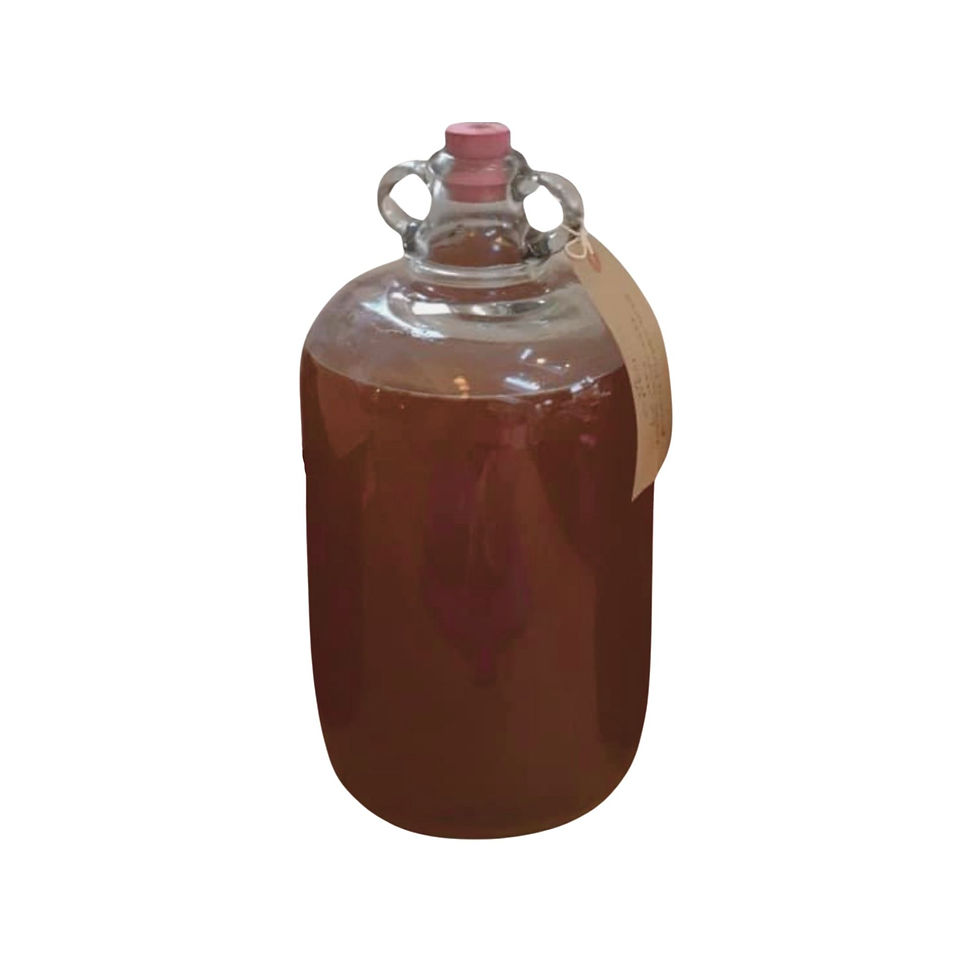
When combined with honey and yeast, liquid whey transforms into Blaand, which is a drink like no other. Sweet and sour, though more sour than sweet, slightly sparkling in a fermenty sort of way. It originated in Scotland.
Gavin of The Greening of Gavin fame is a keen cheesemaker, if you haven't come across him before then I urge you to visit his wonderful site. As a man who tends to have lots of whey around, Gavin makes blaand and describes the taste as reminiscent of chardonnay wine. He is not alone in suggesting this.
What if I don't have enough Whey?
Use fresh whey, no more than a day or two old after making cheese. That makes sense as of course you are working with a dairy product, so it's important it hasn't gone off. If you're struggling to get 2 litres of whey together to make 4.5 litres of blaand, you can freeze whey whilst it's fresh and then defrost it when you've got more to add to it. It will still ferment after defrosting.
Can I just make Whey to make Blaand, without having to make cheese?
Yes though it feels like a bit of a waste of the curds. I am including below a quick method for creating enough acidic whey to make a demijohn of blaand using citric acid, if you want to get going straight away. You can then make a simple soft cheese with the curds by adding sea salt.
However if you'd prefer to make a cheese with rennet you could take a little longer to make a batch of Halloumi Cheese and then use the sweet rennet from that.
Can I use any kind of Milk when making Cheese?
To keep things simple, you need to use milk that has not been homogenized. Homogenisation is a way to make milk smooth and evenly creamy, by forcing the milk through a small space, breaking down the fat globules and spreading them throughout the milk so the cream doesn't separate. When making cheese, using homogenised milk can lead to a weaker curd being produced and can make it difficult for the ingredients to coagulate as you want them to. You can add calcium chloride when making cheese with homogenised milk to avoid that problem but, rather than needing more ingredients to make a simple whey, I suggest you use full fat, pasteurised, organic milk for this.
Making a simple Whey for Blaand
You will need:
4 litres of pasteurised, organic milk - full fat or semi skimmed
2 teaspoons of citric acid
You will also need:
A large pan, big enough to comfortably take 4 litres of liquid, with a lid
A colander
A large bowl into which you will strain the whey.
Method
Pour the milk into the large pan. Heat gently to 90 degrees C, then maintain the milk at that temperature for 10 minutes, ensuring it doesn't boil.
Let it stand for 10 minutes. Whilst it's cooling, dissolve the citric acid in a little warm water.
Add the citric acid and water to the milk, stir gently and you'll see the milk instantly curdle when it comes into contact with the citric acid. Put the lid on and leave to cool, allowing the separation process to finish completely.
Line the colander with the cheesecloth or straining bag and put it over a large bowl. Pour the liquid into the lined colander so the whey drains into the bowl underneath. When it looks like the draining has almost stopped, form the cheesecloth or straining bag into a ball and twist the top. As you gently twist this squeezes the cheese, helping to drain the remaining whey from the curds.
When totally drained, you will have whey in the bowl to make Blaand, hopefully around 2 litres. Add salt to the curds to make a very simple cream cheese, with maybe some garlic and/or herbs. Then use the cheese in cooking or spread on crackers. Yum.
Honey Blaand Recipe
You will need:
2 litres of fresh whey
1.25kg honey
A sachet of sparkling wine yeast or mead yeast or all purpose wine yeast.
You will also need:
A large pan, big enough to take the whey and the honey
Cleaner/Steriliser to sterilise all equipment which will come into contact with your Blaand
A standard demijohn (glass or PET) or 5 litre food grade brewing bucket
An airlock, plus a bung prebored with a hole if you're using a glass demijohn
A funnel
A simple syphon to help take the Blaand off the sediment, and also to bottle
Bottles with caps or corks and labels
Optional: winemaking hydrometer.
Alternatively a Mead Kit will contain most of the brewing equipment you need.

Method
Pour the whey into the large pan and heat gently whilst adding a small amount of honey at a time until it is all dissolved in the whey. Don't be tempted to add too much honey at once or you may end up with burnt honey on the bottom of the pan when it all sinks to the bottom. Heat the whey only enough to dissolve the honey. If you heat the honey too much it tends to lose its character. Which is a shame as you want that honey taste to come through in the Blaand.
Allow to cool completely.
Meanwhile sterilise your equipment, including the hydrometer if using one.
Once the whey and honey mix are cold, take a reading with the hydrometer if using (if you don't have one, you can ignore this, it's entirely optional). You'd expect the reading to be between 1.090 and 1.110 at this point.

Using the funnel, pour the whey/honey mix into the sterilised demijohn/bucket and sprinkle half the sachet of yeast on to the surface.
Half fill the airlock with water, then fit (with the bung if needed) into the vessel.
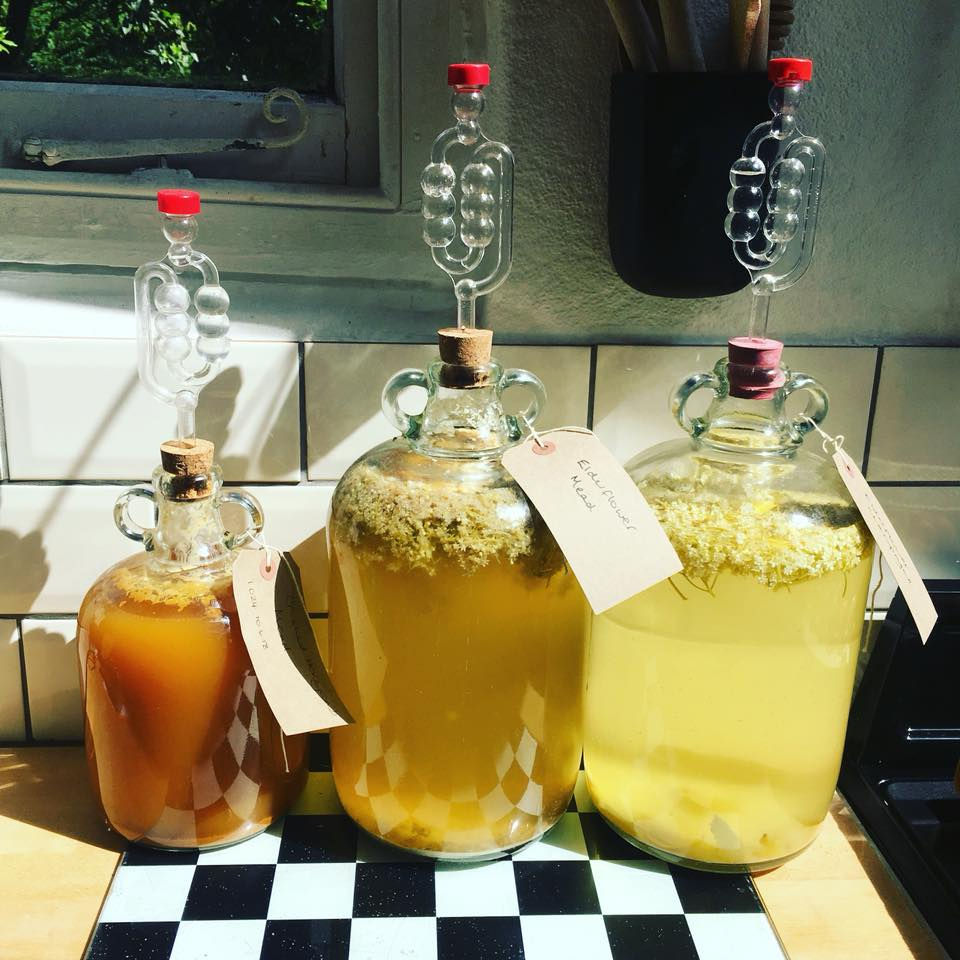
Leave to ferment out of direct sunlight until it has completely stopped. This could be anything from 3 weeks to 2.5 months depending on the temperature and the sugar content of the honey. If using a hydrometer, you could take a reading. If fermentation appears to have stopped and the reading doesn't change 3 days in a row, you should be good to bottle. Make a note of this final reading too if you wish to calculate the alcohol content of your Blaand.
If your Blaand is clear, you can bottle now. If it isn't, leave it for a couple more weeks to clear. If it still isn't, you could rack it off into another sterile vessel and leave for a bit longer. If it still doesn't clear, you could try a technique called 'cold crashing' where you either put the vessel in the fridge with the airlock intact overnight (tricky in my fridge, not big enough) or, if the weather is cold outside, put it out overnight without allowing it to freeze. This method will encourage the suspended bits which make liquids look cloudy to sink to the bottom. Obviously be careful when you bring it back in not to swirl all the bits back into the liquid again. And if it still doesn't clear: who says it is traditionally clear anyway? After all, when did someone last serve you a glass of Blaand...
Bottle and label. Blaand made with sugar rather than honey (which is another version to try) can be drunk pretty quickly after bottling but honey takes longer to ferment. I would leave your blaand for at least 2 months before you try it, and be prepared to leave it for longer to mellow. The taste becomes stronger the longer you leave it. The only way to find out how long to leave future batches is to experiment with the first one.
If you find your blaand a little too sour for your taste no matter how long you leave it, you could add honey to the glass before pouring the blaand and stirring. This to me is no different than adding elderflower cordial to prosecco or, indeed, sugar to tea. The purists may balk at this suggestion but, if it makes your blaand more to your taste, then why not?
Want to learn more about Blaand?
Book recommendation:

Did you find this post helpful? Please share it ↓ - thank you


Comments