


Homemade Ginger Wine Recipe
I do love a ginger wine. I can remember my Mum drinking it many moons ago, especially Crabbies Green Ginger Wine (though I never quite understood why it was green?). Homemade Ginger Wine is straightforward to make, it tastes delicious and you know what's in it. I haven't yet had any turn out green, but we can't have everything now can we.
Lovely to drink in front of the fire on a chilly night, homemade ginger wine is also great mixed with whiskey as a hot toddy if you're not feeling 100%.
This post assumes you have wine making equipment. If you don't, winemaking starter kits are widely available.

Homemade Ginger Wine Recipe

Makes approximately 4.5 litres/6 bottles
Ingredients
one 12cm long piece of root ginger, more if you like but remember too much ginger may blow your head off a bit
3 lemons (zest and juice, avoid including the pith)
1 orange (zest and juice, avoid including the pith)
1.4kg sugar - standard white granulated is fine
1 sachet white wine yeast
1 teaspoon yeast nutrient
bottled/spring/filtered/boiled water to 4.5 litres. If you use a 5 litre bottle of water, you could use the water and drill the lid to create another PET demijohn for use in homebrewing.
You will also need
1x 5 litre food grade bucket with bored lid, and grommet fitted in the hole
a glass demijohn with bored bung or pet demijohn with bored lid
a large pan
a stirring spoon
a clean tea towel
butter muslin and a sieve
a funnel
6 bottles and wine labels
shrink wraps for the bottles if you really want them to look nice. Well worth the effort to elevate your winemaking, especially if you plan to give any away as gifts.

Method
Sterilise all equipment that will be used.
Peel the ginger and thinly slice it.
Put the ginger slices and the orange and lemon juice and zest into the fermentation bucket.
Boil 2 litres of water and pour into the bucket with the ginger and zest.
Cover loosely with a clean tea towel and leave for 48 hours, stirring occasionally.
Add 1.5 litres of cold water, plus the sugar, the orange and lemon juices, the grape juice concentrate and the yeast nutrient.
Stir well until the sugar is dissolved.
Add yeast according to the packet instructions.
Cover loosely again with the tea towel and leave for another 3-4 days, stirring occasionally.
Using the sieve, funnel and muslin, strain the wine into the demijohn.
Check the level. Top up to the shoulders of the demijohn with water if needed.
Fit the bung to the glass demijohn (or put the bored cap on if you're using a PET demijohn), then add water to the airlock and fit it.
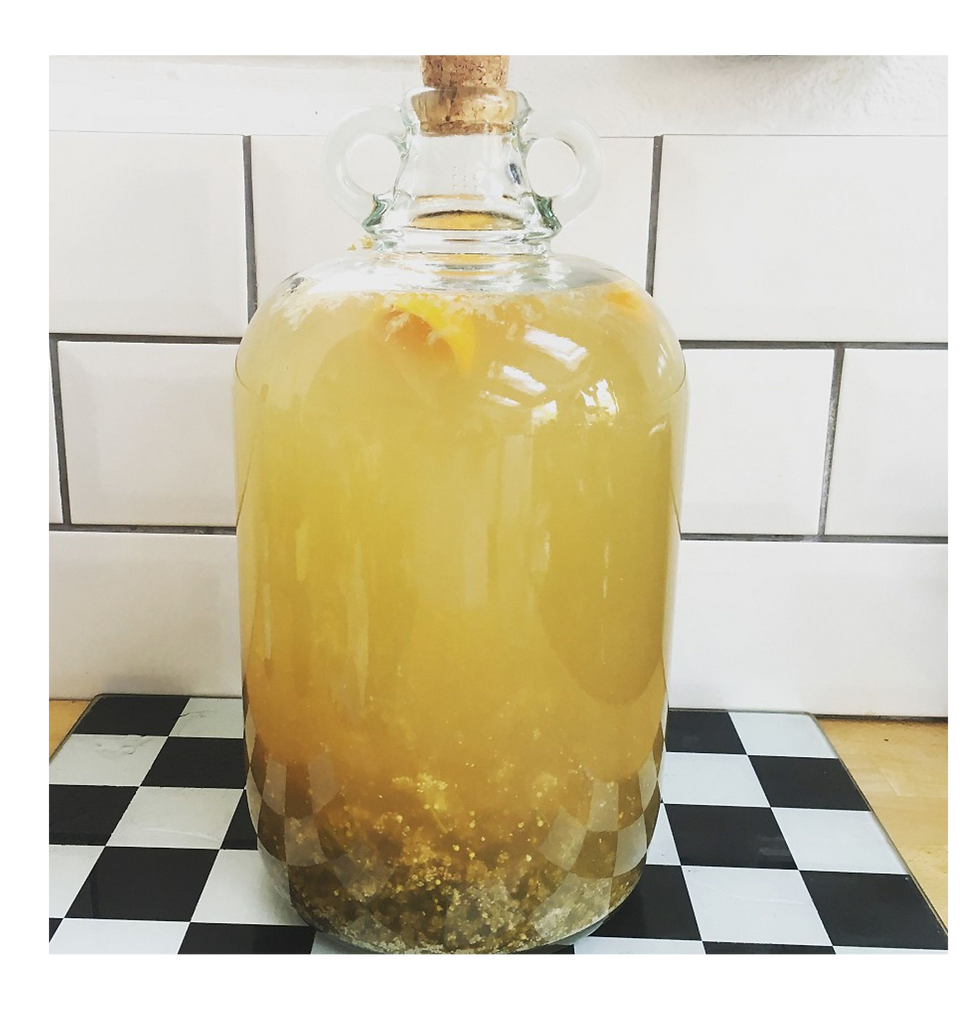
Leave the demijohn in a reasonably warm place. You will know fermentation has started when the airlock starts to bubble.
Place the fermenting wine in a spot out of sunlight at room temperature.
Leave to ferment out for at least 2 months.
Ginger wine can have quite a lot of sediment so you can choose whether to do this step, or leave as is. Sterilise the first bucket and syphon the wine into it, leaving the sediment behind (known as racking off). Clean and sterilise the original demijohn and put the racked wine back in it, topping up again with water to the demijohn's shoulders now the sediment has gone. If you do carry out this step, avoid taking too long over it so oxgen doesn't get to your wine. Refit the bung/lid and airlock.
Leave for a further 2 months to clear.
When you are confident fermentation has completely finished and the wine is clear, prepare to bottle.
Bottle your wine, label and add shrink wraps if liked (see above).
Leave for about a month before drinking. A bit longer always helps with ginger wine.
Want to go Beyond Traditional Wine Making?
Book recommendation:



Comments